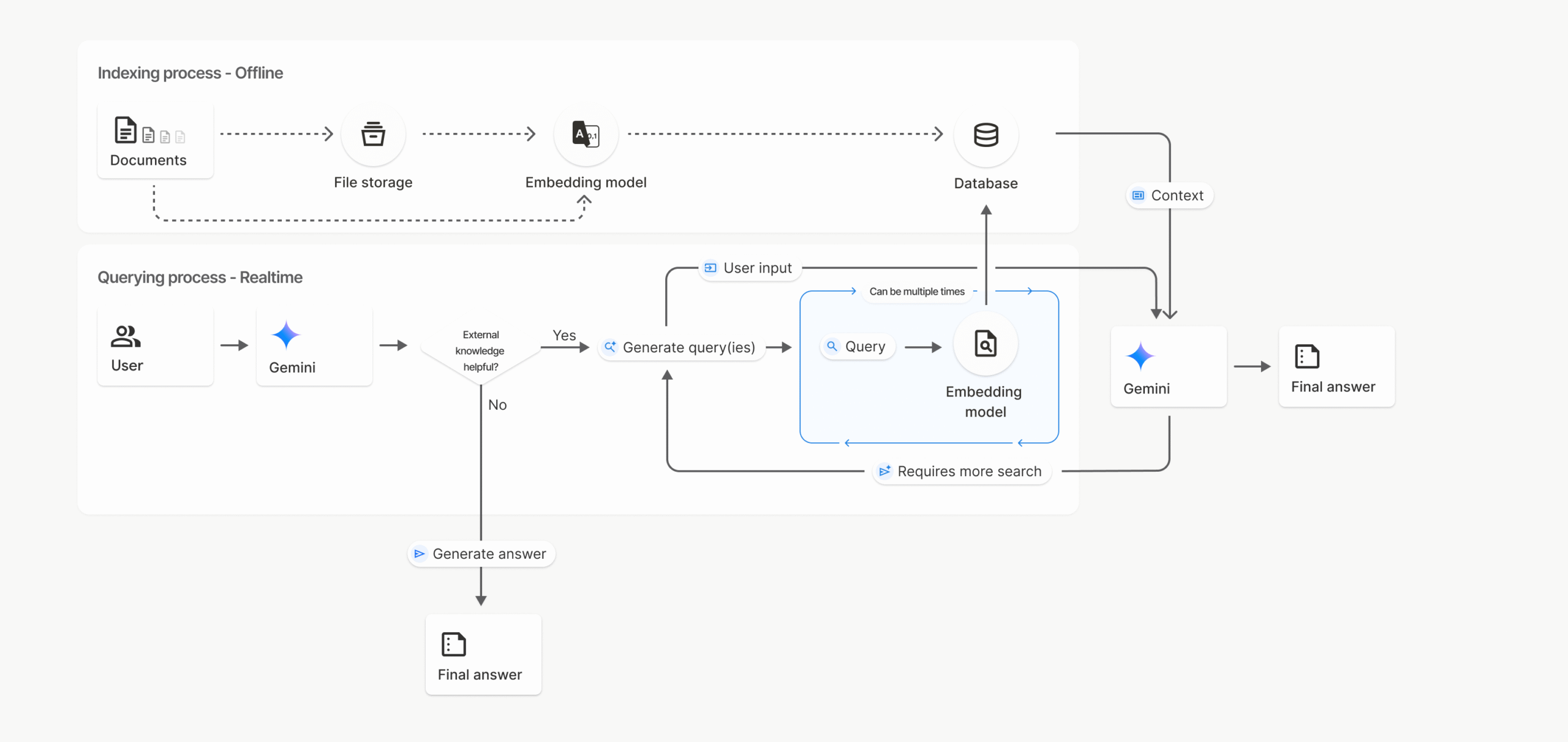
A search api can be an important part of modern software development. Applications often need to retrieve information from websites, databases, documents, product catalogs, news sources, or other online resources. Instead of building an entire search infrastructure from scratch, developers can use an API to access search functionality through a structured interface. However, choosing the right solution requires more than comparing prices or looking at a list of features. Developers should consider data quality, reliability, speed, scalability, documentation, integration requirements, and long-term costs.
What Is a Search API?
A search API is an application programming interface that allows software to send search requests and receive results in a machine-readable format. Rather than manually interacting with a search engine through a browser, an application can submit queries programmatically and process the returned data.
Depending on the provider, results may include titles, links, descriptions, rankings, images, metadata, or other structured information. Some solutions focus on general web search, while others are designed for specialized searches such as products, news, local businesses, academic resources, or internal databases.
For developers, the main advantage is automation. A properly designed search api can make it easier to add search capabilities to an application without developing and maintaining every underlying component.
Identify Your Search Requirements First
Before comparing providers, developers should define exactly what the application needs. A search solution that works well for one project may be unsuitable for another.
Consider the type of information that needs to be searched. A project might require web results, website-specific content, product information, news articles, or structured database records. The required result format also matters. If an application needs JSON responses with specific fields, the API should provide those fields consistently.
Query volume is another important consideration. A small application may only send a few thousand searches each month, while a large platform could generate millions of requests. Understanding expected usage helps developers avoid choosing a service that becomes expensive or restrictive as the application grows.
Evaluate Result Quality
Speed is valuable, but fast results are not useful if the information returned is inaccurate or irrelevant. Search quality should therefore be one of the most important evaluation criteria.
Developers should test realistic queries before committing to a provider. Try simple searches, highly specific queries, misspelled terms, location-based searches, and queries containing multiple concepts. Examine whether the returned results match the application’s purpose.
It is also useful to evaluate consistency. A reliable search api should produce useful results across different query types rather than performing well only in ideal testing conditions.
Look at API Documentation
Good documentation can significantly reduce development time. Developers should examine how clearly the provider explains authentication, endpoints, request parameters, response formats, error codes, limits, and examples.
Well-structured documentation allows developers to understand an API before writing extensive integration code. Code examples in commonly used programming languages can also make implementation easier.
Documentation should explain how changes are handled as well. If an API introduces a new version, developers need to know how migration works and how much advance notice is provided for breaking changes.
Consider Performance and Response Time
Search functionality often appears directly in user-facing applications, so performance can have a noticeable impact on user experience. Developers should investigate average response times as well as performance during periods of heavy usage.
Latency can vary depending on query complexity, geographic location, and the provider’s infrastructure. If the application serves users in multiple regions, developers should consider whether the service has appropriate infrastructure or routing for those users.
Testing actual API performance is usually more informative than relying only on advertised specifications.
Understand Pricing and Usage Limits
Pricing can become complicated when search requests increase. Some providers charge according to the number of requests, while others offer different pricing tiers based on features, volume, or response types.
Developers should calculate estimated monthly usage before selecting a plan. It is also important to check whether failed requests, retries, or additional features count toward usage.
Rate limits deserve special attention. An inexpensive plan may become impractical if it allows only a small number of requests per minute. Developers should compare both cost and capacity rather than looking at the advertised price alone.
Check Scalability
An application may begin with modest search requirements and grow considerably over time. The selected search api should be capable of supporting that growth without requiring a complete technical redesign.
Check whether higher-volume plans are available and whether the provider supports increased request rates. Developers should also investigate whether enterprise options, dedicated capacity, or custom arrangements are available when necessary.
Scalability is particularly important for applications where search is a core feature rather than an occasional utility.
Examine Security and Authentication
Security should never be overlooked when integrating an external API. Developers should understand how authentication works and how API credentials should be stored.
Keys should not be exposed in client-side code when doing so would allow unauthorized use. Applications should generally protect credentials on the server side and implement appropriate access controls.
It is also worth reviewing the provider’s policies regarding data handling, logging, retention, and privacy. The requirements may be particularly important for applications that process sensitive queries or customer information.
Review Reliability and Error Handling
No external service is available every second of every day. Developers should therefore understand how a provider handles outages, rate limits, invalid requests, and temporary failures.
A dependable API should provide meaningful error responses so applications can respond appropriately. Retry strategies, timeouts, caching, and fallback mechanisms can help reduce the impact of temporary problems.
Service-level information can also be useful for businesses that depend heavily on search functionality. Check whether the provider publishes uptime information or communicates incidents and maintenance clearly.
Think About Integration and Flexibility
An API should fit naturally into the application’s existing architecture. Developers should consider supported programming environments, response formats, authentication methods, and available configuration options.
Flexibility is especially useful when applications have different search requirements. Features such as filtering, pagination, localization, safe-search controls, domain restrictions, or custom parameters may make one provider significantly more practical than another.
The easier the API is to integrate and customize, the less maintenance the development team may need later.
Test Before Making a Long-Term Decision
A practical evaluation is often better than choosing based on marketing materials. Developers should create a small proof of concept using real application scenarios.
Measure response time, result relevance, error rates, request limits, and actual costs. Test different query types and examine how the API behaves when requests fail.
A trial can also reveal unexpected implementation issues. For example, a provider may offer an attractive feature set but return data in a format that requires extensive transformation. Another provider may have fewer features but integrate smoothly with the existing application.
Plan for Maintenance and Future Changes
Choosing a search provider is not only an initial development decision. APIs can change over time, pricing can be updated, and features can be introduced or discontinued.
Developers should review the provider’s versioning policies and communication practices. It is also wise to keep the application’s search integration modular so that replacing the service is possible if circumstances change.
A well-designed abstraction layer can prevent the rest of the application from becoming tightly dependent on one provider’s unique implementation.
Final Considerations
Selecting a search api requires a balance between technical performance, search quality, reliability, security, scalability, and cost. Developers should begin by identifying their actual requirements and then compare providers against those requirements rather than choosing solely on price or popularity.
Testing realistic queries, reviewing documentation, calculating expected usage, and evaluating failure scenarios can help reveal whether a solution is suitable for long-term use. The best search solution is ultimately the one that delivers dependable results, fits the application’s architecture, remains affordable as usage changes, and gives developers enough flexibility to adapt as the project grows.