
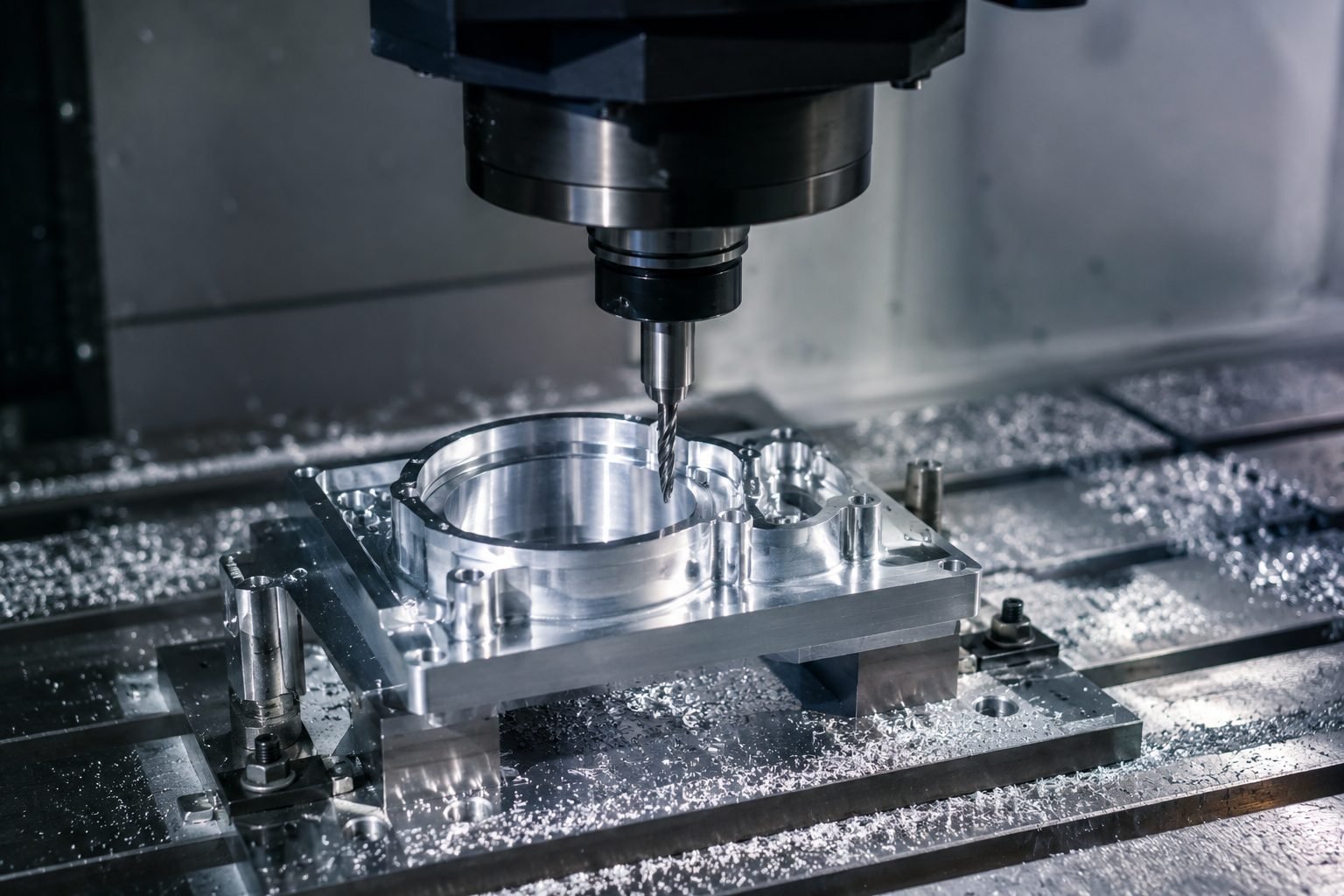
Turning a digital design into a real, functional product requires more than simply creating a three-dimensional model. Manufacturers must consider materials, dimensions, tolerances, surface finishes, assembly requirements, and real-world performance before a product can move toward mass production. This is where CNC prototyping services play an important role. By using computer-controlled machining technology, businesses can transform digital designs into accurate physical prototypes that can be tested, evaluated, and improved.
CNC, or Computer Numerical Control, machining is a manufacturing process in which programmed instructions control cutting tools and machinery. The technology can produce components from materials such as aluminum, steel, brass, plastics, and other engineering materials. Because CNC machining offers high precision and repeatability, it has become a valuable solution for companies developing new products across industries.
From Digital Design to Physical Prototype
The product development process often begins with a computer-aided design (CAD) model. Engineers and designers use CAD software to create detailed representations of a component or complete product. These models can include precise measurements, holes, curves, threads, pockets, mounting points, and other important features.
However, a digital model cannot always reveal how a product will perform in the real world. A design may look correct on a computer screen but encounter problems during assembly or operation.
CNC prototyping provides a practical way to identify these issues. The CAD model can be converted into machine instructions, allowing CNC equipment to manufacture a physical version of the component. Designers can then inspect the prototype and determine whether it meets the intended requirements.
This physical feedback can be extremely valuable because it allows manufacturers to make improvements before investing heavily in production tooling or large manufacturing runs.
Precision That Supports Product Development
One of the biggest advantages of CNC machining is its ability to create highly accurate components. Precision is particularly important when prototypes contain complex dimensions or must fit together with other parts.
For example, a prototype housing may need specific mounting holes to align with an internal electronic component. If those holes are slightly misplaced, the final product may not assemble correctly. CNC machining can produce these features according to the specifications contained in the digital design.
The accuracy of the prototype also makes testing more meaningful. When a prototype closely matches the intended production component, engineers can evaluate its dimensions, fit, function, and performance with greater confidence.
This is one reason CNC prototyping services are widely used for engineering validation and product development.
Choosing the Right Material
A successful prototype is not only about shape and dimensions. Material selection can also influence how a product performs.
Different applications require different material properties. Aluminum, for example, can provide a combination of low weight, strength, corrosion resistance, and machinability. Steel may be selected when greater strength or durability is required. Engineering plastics can be useful when designers need lightweight components, electrical insulation, or particular chemical resistance.
CNC prototyping allows developers to create prototypes from many of the same materials that may be considered for final products. This can provide a more realistic understanding of how the component will behave.
Testing a prototype made from a representative material can help reveal problems related to strength, heat, wear, dimensional stability, and assembly.
Testing Form, Fit, and Function
A prototype should do more than look like the final product. It should help engineers determine whether the design works as intended.
CNC-machined prototypes can be used to evaluate physical dimensions, assembly processes, mechanical movement, and interaction between different components. Engineers can install prototype parts into larger assemblies and check whether everything fits correctly.
For mechanical products, prototypes can also help evaluate moving parts, fastening systems, clearances, and load-bearing areas.
If a component does not perform as expected, the design can be modified and another prototype can be manufactured. This creates an iterative development process in which every version can become more refined.
Identifying Design Problems Before Mass Production
Finding a design problem after mass production begins can be expensive. Changes may require new tooling, revised manufacturing processes, replacement components, or even product recalls.
Prototyping reduces this risk by moving important testing activities earlier in the development process.
Suppose a company designs a custom enclosure for an electronic device. The digital model may show that the enclosure has enough space for the internal components. However, once the physical prototype is assembled, engineers may discover that cables interfere with a mounting bracket or that a cover is difficult to remove.
These issues can be corrected before production quantities increase.
By discovering problems during prototyping, manufacturers can reduce unnecessary costs and avoid committing to a design that has not been adequately tested.
Supporting Rapid Design Iterations
Modern product development often involves multiple design revisions. Engineers may change dimensions, adjust wall thicknesses, reposition holes, modify mounting features, or select different materials after evaluating a prototype.
CNC machining can support this iterative process effectively.
Once the CAD model has been updated, the revised design can be programmed for machining. A new physical prototype can then be produced for another round of testing.
This approach allows development teams to move from one design version to the next without waiting for large-scale production. The faster a team can test and improve a concept, the more efficiently it can move toward a reliable final design.
Creating Complex and Detailed Components
Another advantage of CNC machining is its ability to produce components with intricate geometries and detailed features.
Modern CNC machines can perform operations such as milling, drilling, turning, boring, threading, and pocketing. Multi-axis machining can also provide greater flexibility when manufacturing complex shapes.
This makes CNC prototyping useful for products that contain sophisticated mechanical components or precision features.
Rather than relying only on simplified mock-ups, engineers can create prototypes that closely represent the geometry of the intended component. This can make functional testing much more valuable.
Reducing Development Risks
Product development always involves some level of uncertainty. A concept may appear promising but still contain technical challenges that are difficult to identify without physical testing.
CNC prototypes reduce some of this uncertainty by providing tangible evidence about how a design performs.
Teams can inspect dimensions, test assembly, assess material characteristics, and identify manufacturing challenges. The information gathered from these tests can then be incorporated into later design revisions.
This helps businesses make development decisions based on physical evidence rather than relying entirely on computer models or assumptions.
Moving From Prototype to Production
CNC prototyping can also provide useful information for the transition toward manufacturing. During prototyping, engineers may discover that certain features are difficult to machine, require excessive material removal, or could be redesigned for greater efficiency.
These lessons can influence the final production design.
In some cases, CNC machining may continue to be used for low-volume production, custom components, replacement parts, or specialized products. In other situations, the prototype serves as a validation step before a company moves to another production method.
Either way, prototyping helps establish greater confidence in the design before production requirements become more demanding.
The Role of CNC Prototyping in Modern Manufacturing
The ability to move quickly from a digital concept to a physical component has become increasingly important in competitive manufacturing environments. Companies need to test ideas, respond to customer requirements, and improve designs without unnecessary delays.
CNC prototyping services provide a practical bridge between engineering concepts and functional products. They combine digital design data with precision machining to create physical components that can be inspected and tested.
From selecting appropriate materials to verifying dimensions and testing assembly, CNC prototypes support many stages of product development. They can help identify problems early, improve design quality, and reduce the risks associated with moving an untested concept into production.
Conclusion
Turning a design into a functional product requires careful testing, refinement, and validation. A digital CAD model provides an essential foundation, but physical prototypes reveal information that computer models alone cannot always provide.
CNC machining makes it possible to create accurate, durable, and functional prototypes from a wide range of materials. These prototypes can be used to evaluate fit, dimensions, performance, assembly, and manufacturability before large-scale production begins.
By using CNC prototyping services, businesses can shorten development cycles, identify design problems earlier, improve product reliability, and move from concept to production with greater confidence. For companies developing mechanical, industrial, automotive, electronic, or consumer products, CNC prototyping remains a powerful tool for transforming ideas into practical, functional products.
