
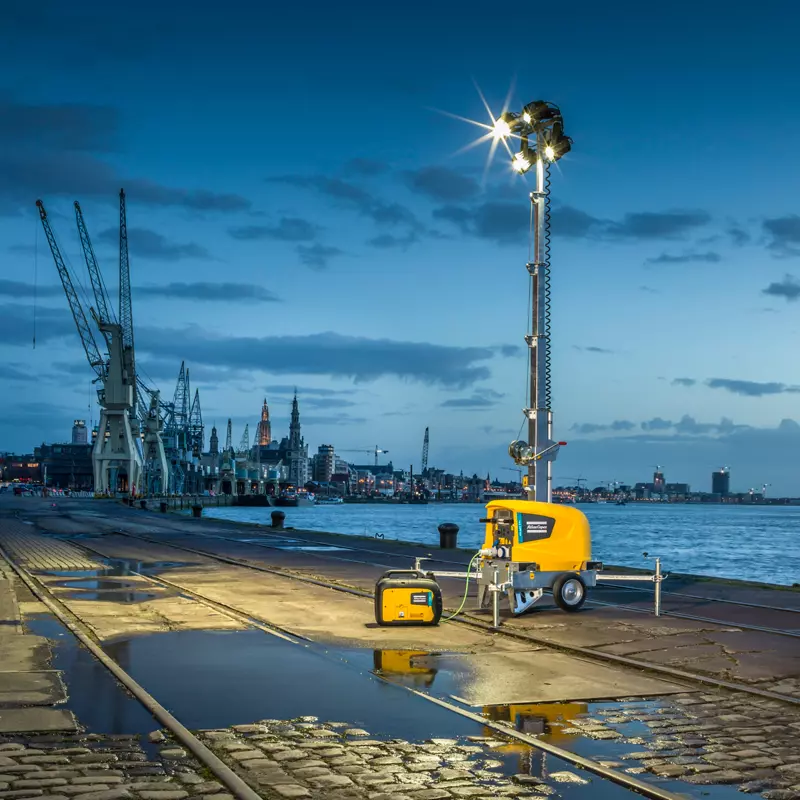
In the modern industrial landscape, the demand for continuous, round-the-clock productivity has never been higher. Whether managing a massive construction site, overseeing a remote mining operation, maintaining critical infrastructure, or handling emergency road repairs, businesses often push past traditional daylight hours. However, transitioning operations into the night brings profound visibility challenges that can compromise safety, slow down progress, and increase operational risks. To overcome these hurdles, industrial project managers rely heavily on specialized illumination equipment. At the center of this nighttime capability stands the versatile and powerful light tower, an indispensable asset that transforms pitch-black worksites into safe, productive, and fully operational environments.
Enhanced Workplace Safety and Accident Prevention
The primary and most critical advantage of deploying a light tower on any industrial worksite is the dramatic enhancement of workplace safety. Darkness acts as a multiplier for hazards, obscuring uneven terrain, heavy machinery blind spots, stray materials, and open excavations. When workers operate in poorly lit conditions, the probability of slips, trips, falls, and catastrophic machinery accidents rises exponentially.
By strategically placing a high-output light tower around the perimeter and core work zones, organizations eliminate deep shadows and blind spots. Bright, uniform illumination ensures that heavy equipment operators can clearly see ground crews, pedestrians, and potential obstacles. Furthermore, clear visibility allows workers to inspect tools, secure rigging, and monitor complex processes with precision, drastically reducing the likelihood of human error caused by visual fatigue and strain.
Boosting Productivity and Operational Efficiency Around the Clock
In competitive industries, time translates directly into revenue. Project delays incur massive financial penalties, and waiting for sunrise to resume work can severely disrupt tight schedules. A reliable light tower bridges the gap between day and night shifts, enabling seamless operational continuity.
When workers are provided with daylight-like conditions after dark, their morale and efficiency remain high. Tasks that require meticulous attention to detail—such as welding, pouring concrete, assembling structural components, and conducting quality control checks—can proceed without compromise. Instead of shutting down operations as dusk settles, project managers can maintain momentum, meet aggressive deadlines, and accelerate project completion timelines significantly.
Versatility and Mobility for Diverse Industrial Applications
Industrial environments are rarely static; they frequently shift, expand, and relocate as projects progress. Modern equipment must be equally adaptable, and a mobile light tower delivers exceptional versatility across a wide spectrum of sectors.
Portability and Rapid Deployment
Today’s industrial light tower units are engineered for maximum mobility. Mounted on rugged trailers with heavy-duty axles and towing capabilities, they can be easily transported across rough terrain, rugged mining roads, and remote construction zones. Once on-site, a single operator can quickly position the unit, level the trailer, and deploy the mast. Telescopic masts, often reaching heights of thirty feet or more, allow the light fixtures to cast a wide, downward-sloping beam that covers vast areas while minimizing blinding glare for workers on the ground.
Adaptability Across Multiple Sectors
The utility of a light tower spans numerous industries. In civil engineering and road construction, mobile units illuminate highway paving and bridge repairs, keeping traffic flowing safely while work continues away from peak daytime congestion. In the oil and gas sector, remote drilling rigs rely entirely on continuous artificial lighting to maintain 24-hour extraction schedules safely. Similarly, agricultural processing plants, shipping ports, and disaster relief operations depend on these robust units to maintain visibility during power outages or night shifts.
Cost-Effectiveness and Energy Efficiency
Operating heavy equipment through the night can quickly become expensive if the energy source is inefficient. Fortunately, the evolution of lighting technology and power generation has made the modern light tower remarkably cost-effective.
The transition from traditional metal halide lamps to energy-efficient LED fixtures has revolutionized industrial lighting. LED light towers consume significantly less fuel while delivering brighter, crisper, and more natural illumination. Lower fuel consumption translates directly into reduced operational expenditures and a smaller carbon footprint. Additionally, many contemporary units feature hybrid or solar-powered systems, allowing them to run silently for hours on stored battery power before automatically engaging the backup diesel generator. This reduces fuel waste, cuts maintenance requirements, and lowers overall project overhead.
Advanced Features and Technological Integration
As industrial operations become increasingly automated and data-driven, the standard light tower has also evolved. Contemporary units are equipped with smart technologies that enhance their usability and reduce the need for constant manual intervention.
Many models now feature automated dusk-to-dawn sensors that activate the lights as natural sunlight fades and shut them down when the sun rises, conserving fuel and battery life without requiring manual supervision. Furthermore, telematics integration allows site managers to monitor fuel levels, engine performance, runtime hours, and technical faults remotely via smartphone or computer dashboards. This capability enables proactive maintenance, prevents unexpected breakdowns, and ensures that the worksite remains continuously illuminated and secure.
Environmental and Operational Reliability
Industrial sites are notoriously harsh environments characterized by dust, moisture, extreme temperatures, and heavy vibrations. A dependable light tower is built to withstand these punishing conditions. Enclosed in weather-resistant, sound-attenuated cabinets, these units operate reliably in freezing winter conditions, sweltering summer heat, and torrential rainstorms. Sound attenuation is particularly valuable in urban construction zones or residential areas where nighttime noise ordinances must be strictly observed, allowing powerful illumination to be delivered quietly and without disturbing the surrounding community.
Conclusion
The success of nighttime industrial operations hinges on the ability to create a safe, productive, and visible working environment. Darkness should never be a barrier to progress, safety, or efficiency. By integrating a high-performance light tower into your operational strategy, you unlock a multitude of benefits ranging from enhanced worker safety and uninterrupted productivity to remarkable fuel economy and advanced technological control. Whether executing a short-term emergency repair or managing a multi-year construction project, investing in robust, reliable illumination solutions ensures that your operations run smoothly, safely, and profitably around the clock.
